How Long Should Commercial Asphalt Really Last in Denver?
Commercial asphalt rarely fails all at once. It wears down gradually under traffic, weather exposure, and time, slowly enough that deterioration seems invisible until suddenly it’s obvious and expensive. For property managers and business owners in Denver, the real challenge isn’t just knowing what “normal” lifespan looks like, it’s understanding when strategic action should happen before maintenance costs spike into replacement territory.
A parking lot that lasts 20 years instead of 10 usually doesn’t come down to luck or magic. It comes down to proper thickness specifications at installation, realistic traffic load planning, disciplined asphalt maintenance Denver timing, and how well the asphalt paving Denver design accounts for Colorado’s punishing climate. At DMH Site Services, we help commercial clients plan around realistic lifespan expectations instead of reacting to visible damage after prevention opportunities have passed.
As an experienced Denver commercial asphalt company managing hundreds of commercial properties across the region, we’ve tracked what makes some parking lots reach 25 years while others fail at 10, and the patterns are remarkably consistent.
What Determines Commercial Asphalt Lifespan in Denver?
Commercial asphalt in Denver typically lasts 15 to 25 years when it’s properly designed, professionally installed, and consistently maintained. Parking lots with moderate traffic patterns and disciplined asphalt maintenance Denver programs often reach the higher end of that range, while heavy-use areas such as loading zones, main drive lanes, and delivery routes may require strategic resurfacing sooner, typically at 12-15 years.
Denver’s unique climate plays a major role in asphalt longevity. High-altitude UV exposure at 5,280+ feet dries out asphalt binder faster than in lower-elevation cities, making oxidation a constant threat. Frequent freeze-thaw cycles, sometimes multiple cycles in a single week during spring and fall, accelerate crack development when moisture enters pavement through inadequately sealed surfaces. Temperature swings of 40-50°F in 24 hours create expansion and contraction stress that few other climates impose on pavement.
Asphalt maintenance Denver programs directly and dramatically affect lifespan outcomes. Properties that invest in crack sealing every 1 to 2 years and sealcoating on a regular 2-3 year cycle slow oxidation, prevent water intrusion, and protect pavement flexibility. Without consistent maintenance, commercial asphalt often shows structural base failure in just 8 to 12 years, especially in high-traffic zones where vehicle loads accelerate deterioration of already-compromised pavement.
Once the aggregate base layer becomes compromised by water intrusion and loses its load-bearing capacity, surface repairs stop working effectively. At that point, full reconstruction becomes the only viable option, costing 5-10 times more than the preventive asphalt maintenance Denver that would have prevented base failure.
Commercial asphalt performs best when lifespan planning begins at installation, not years later when problems emerge. Proper thickness for expected loads, engineered base preparation and compaction, effective drainage design and execution, and realistic asphalt maintenance Denver scheduling work together to protect pavement long-term rather than relying on reactive emergency repairs that interrupt operations and strain budgets.
At DMH Site Services, we approach commercial asphalt paving Denver projects as long-term asset management, not short-term construction transactions. We specify thicknesses that match actual use, design drainage that works in Denver’s climate, plan parking lot striping Denver layouts that distribute traffic wear, and establish maintenance schedules that extend life cost-effectively. This comprehensive Denver commercial asphalt company approach consistently delivers superior lifecycle performance compared to lowest-bid installations that ignore planning and maintenance realities.
Why Denver Commercial Properties Experience Uneven Pavement Aging
Local Insight
In Denver, we consistently see commercial parking lots fail unevenly, some sections deteriorating rapidly while others remain serviceable. Drive aisles and main delivery paths often show serious cracking and structural failure years before parking stalls located just feet away. This isn’t random; it reflects the concentration of load stress, drainage patterns, and sun exposure affecting different pavement sections.
At DMH Site Services, we design commercial asphalt paving Denver installations with strategically reinforced sections in predictable high-load areas, thicker asphalt in delivery routes, enhanced base preparation in turning areas, and improved drainage along perimeter drive lanes. This differential design approach often adds 5-8 years to overall lot life and dramatically reduces repeat repairs in the same problematic locations.
Properties that experience heavy commercial snow removal Denver CO operations face additional uneven aging patterns. Areas where snow gets piled repeatedly each winter, often perimeter zones and unused parking sections, experience concentrated freeze-thaw damage, chemical exposure from de-icing materials, and mechanical stress from loader equipment. Meanwhile, high-traffic drive lanes stay relatively clear and experience less freeze-thaw cycling but more abrasion and load stress.
Understanding these differential aging patterns helps asphalt companies Denver commercial specialists like DMH Site Services develop strategic asphalt maintenance Denver programs that prioritize spending where it delivers maximum lifecycle extension. Rather than treating an entire parking lot identically, we focus crack sealing resources on high-stress zones, apply heavier sealcoat to UV-exposed areas, and recommend targeted reinforcement for sections showing premature load-related deterioration.
This strategic approach also informs timing decisions for complementary services. When we’re already planning section-specific asphalt paving Denver repairs, that’s often the optimal time to refresh parking lot striping Denver markings, coordinate with concrete contractors Denver teams on related curb work, or address drainage issues affecting pavement performance. Integrated planning reduces total costs and operational disruption compared to managing each service independently.
How much does a 20×20 asphalt driveway cost?
A 20×20 driveway equals 400 square feet. In the Denver area, residential and light commercial asphalt driveways typically cost $7 to $15 per square foot, putting total project costs between $3,000 and $6,000. Final pricing depends on several critical factors: asphalt thickness (2-3 inches residential vs. 4+ inches commercial-grade), base preparation depth and quality, drainage requirements and grading complexity, site access for equipment, and removal/disposal of existing materials if applicable.
While these numbers apply to smaller residential driveways, the principles scale for commercial work. Experienced asphalt companies Denver contractors price based on specifications, not just square footage, proper base work and adequate thickness often add 20-30% to initial costs but routinely add 5-10 years to functional lifespan, dramatically reducing long-term cost per year of service.
At DMH Site Services, we emphasize that investing in proper base preparation and adequate asphalt paving Denver thickness delivers far better value than minimum-spec installations that seem cheaper initially but require premature replacement. This cost-effective thinking applies whether you’re installing a small residential driveway or a large commercial parking facility.
For commercial properties, coordinating asphalt paving Denver work with related improvements often improves overall value. If you’re already mobilizing equipment and crews, adding parking lot striping Denver updates, working with concrete contractors Denver professionals on complementary improvements, or scheduling around commercial snow removal Denver CO season creates efficiencies that reduce total project costs.
What is the lifespan of an asphalt parking lot?
An asphalt parking lot in Denver usually lasts 15 to 25 years with consistent maintenance, similar to commercial asphalt generally but with some important nuances. Lots experiencing heavy daily traffic, frequent delivery vehicle access, or poor drainage often need strategic resurfacing earlier, typically at 12-18 years for high-stress sections even when other areas remain serviceable.
Parking stalls, especially those in low-traffic areas away from main drive lanes, often last longer than circulation aisles due to significantly lower load stress. A single parking stall might support a vehicle for 30-60 minutes daily, while a drive aisle carries hundreds of vehicles creating continuous wear and shear stress.
Several factors significantly influence parking lot lifespan in Denver’s environment:
- Initial installation quality: Proper asphalt paving Denver thickness and base preparation establish the foundation for longevity
- Drainage effectiveness: Water intrusion causes 90% of premature parking lot failures
- Traffic patterns and loads: Concentrated traffic creates differential wear requiring strategic attention
- Maintenance discipline: Consistent asphalt maintenance Denver programs double or triple functional lifespan
- Climate protection: UV resistance and freeze-thaw durability depend on proper material selection and regular sealcoating
- Winter operations: Commercial snow removal Denver CO practices affect both mechanical wear and chemical exposure
At DMH Site Services, we’ve managed parking lot lifecycles for properties ranging from small professional offices to large retail centers. The consistent pattern: properties with planned, systematic asphalt maintenance Denver programs routinely exceed 20-year lifespans, while properties taking reactive approaches to maintenance rarely make it past 12-15 years before requiring expensive reconstruction.
The cost difference is substantial. A 40,000 square foot parking lot might require $15,000-20,000 in strategic maintenance over 20 years but cost $180,000-240,000 for complete replacement. Properties that defer maintenance to “save money” typically spend far more on premature replacement plus the operational disruption and business impact of major reconstruction projects.
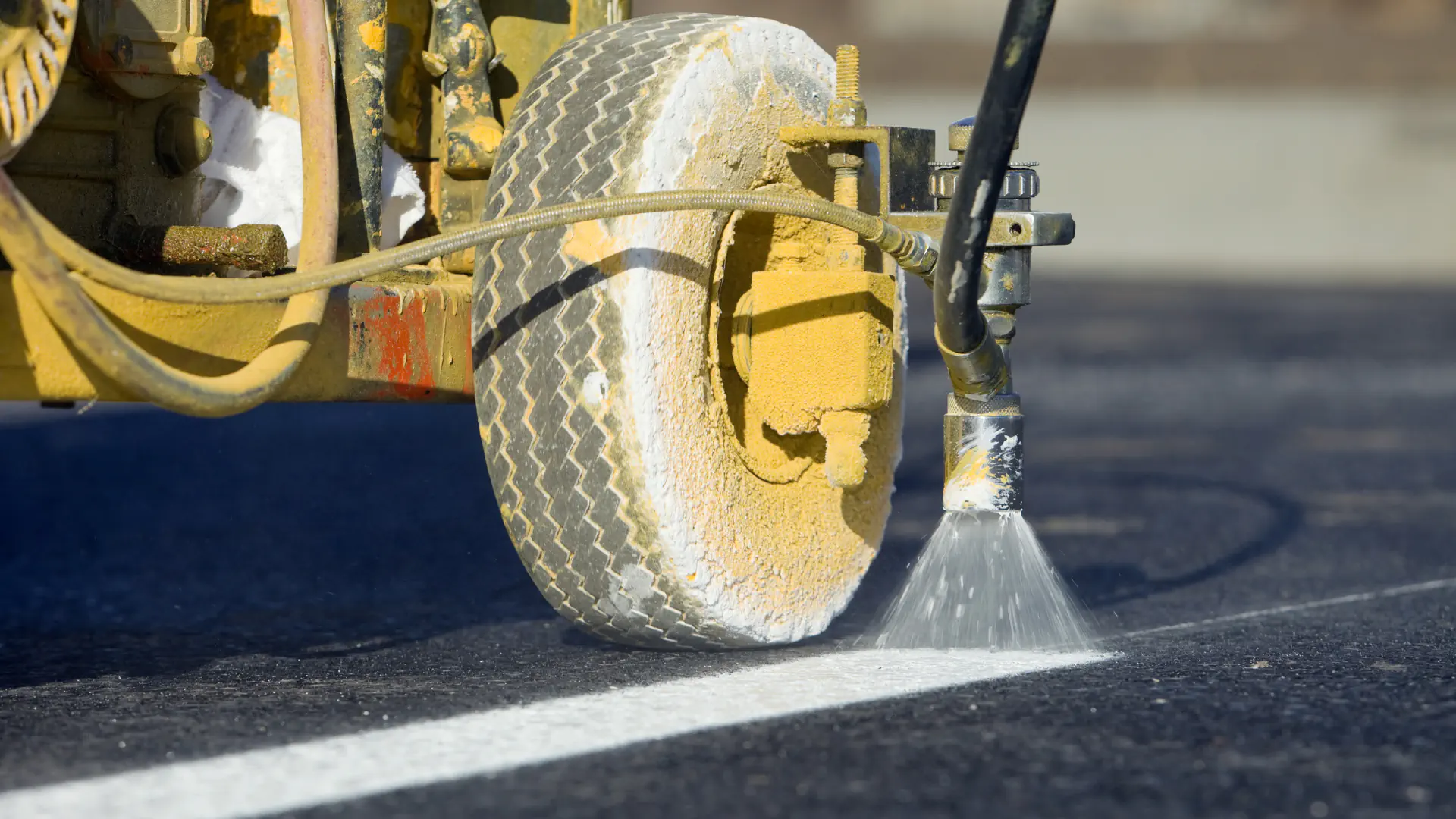
We also find that properties treating parking lot striping Denver as part of lifecycle maintenance, not just regulatory compliance, achieve better pavement outcomes. Fresh striping protects surface areas from direct UV exposure and helps property managers identify emerging pavement problems before they become serious, enabling timely intervention.
How thick should commercial asphalt be?
Commercial asphalt in Denver typically installs at 4 to 6 inches thick for standard parking and traffic areas, depending on expected traffic loads and vehicle types. Heavy-use areas such as loading docks, truck routes, dumpster pads, and fire lanes often require 6 to 8+ inches or supplemental reinforced base layers to prevent rutting and structural failure under concentrated loads.
Thickness decisions should always reflect real-world use patterns, not just minimum code standards or budget constraints. Professional asphalt companies Denver commercial specialists like DMH Site Services evaluate actual expected traffic, vehicle types, weights, frequency, turning stress, and dwell time, to recommend appropriate specifications that deliver required lifespan without over-building where unnecessary.
Under-specifying thickness to reduce initial asphalt paving Denver costs almost always proves expensive long-term. Thin commercial asphalt fails prematurely, creates liability exposure, generates customer complaints, and ultimately costs far more to replace than proper initial installation would have cost. The “savings” of installing 3-inch asphalt instead of 5-inch specification typically evaporates within 5-7 years when early failure forces premature replacement.
Thickness also interacts with other pavement systems. Adequate asphalt thickness over properly prepared base allows better asphalt maintenance Denver effectiveness, crack sealing and sealcoating protect well-built pavement effectively but can’t compensate for inadequate thickness. Similarly, parking lot striping Denver services deliver better long-term value when protecting appropriately specified pavement rather than covering thin installations destined for early failure.
At DMH Site Services, we help property managers and business owners understand thickness specifications in practical, financial terms. Rather than technical jargon about load equivalencies and structural numbers, we explain: “This 5-inch specification will likely last 20 years with normal maintenance. The 3-inch alternative might save $15,000 now but will probably fail in 10 years, costing $60,000 to replace, a net loss of $45,000 plus years of poor appearance and operational disruption.”
What is the average cost to seal an asphalt driveway?
Sealcoating an asphalt driveway in Denver usually costs $0.15 to $0.35 per square foot, depending on surface condition, material quality, application method, site access, and current market rates. For the typical 400-square-foot residential driveway (20×20), total sealcoating costs range from $60 to $140.
Commercial parking lots follow similar per-square-foot pricing but often achieve better rates at scale, larger projects typically cost $0.12 to $0.25 per square foot. A 40,000 square foot commercial lot might cost $5,000-10,000 for professional sealcoating including surface preparation and proper application.
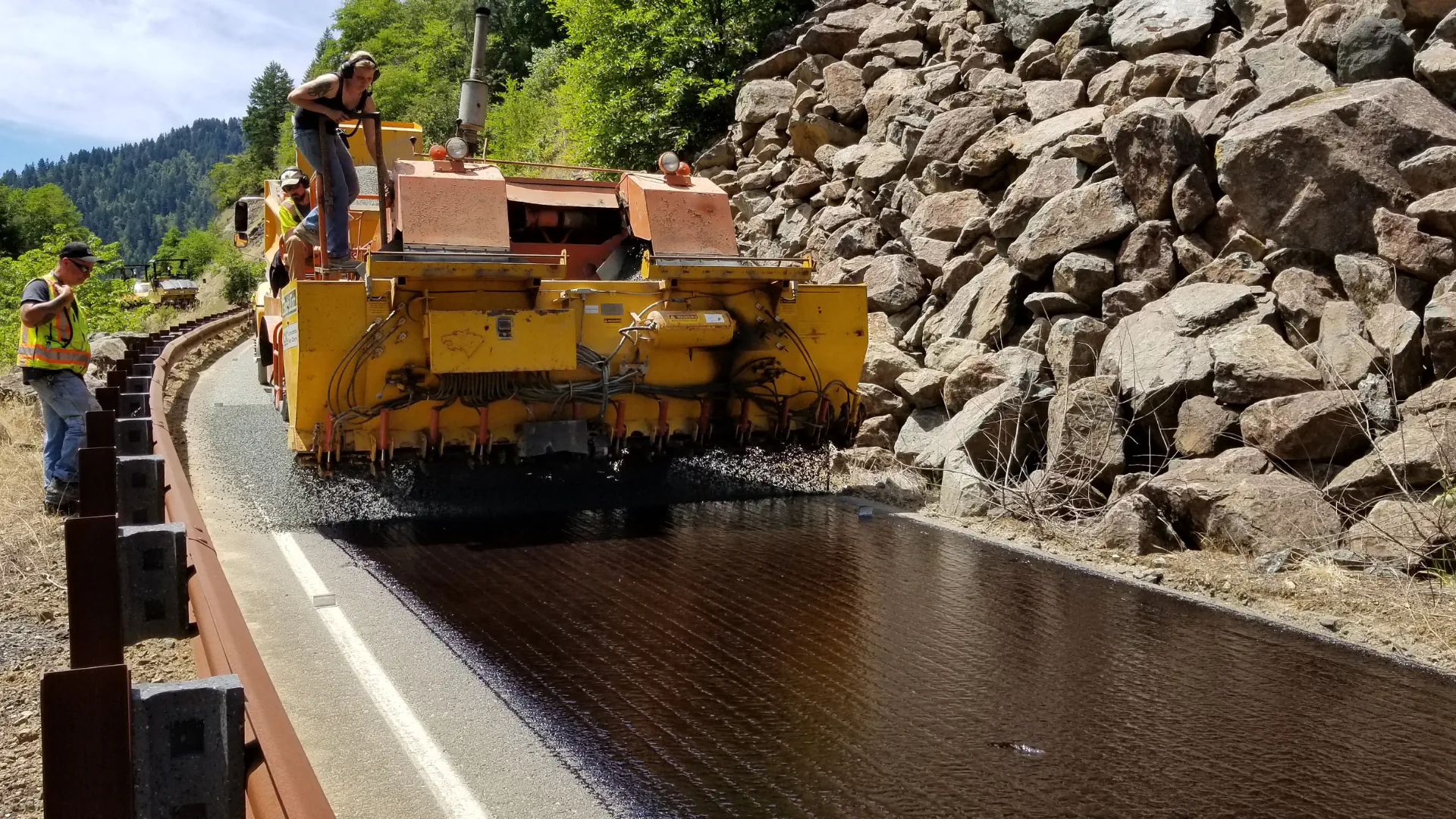
While sealcoating represents ongoing expense, it’s among the most cost-effective asphalt maintenance Denver investments property owners can make. Professional sealcoating protects against UV oxidation that makes asphalt brittle, prevents water intrusion that causes freeze-thaw damage, improves surface appearance and property aesthetics, and extends pavement life by 3-5 years per application when done on proper schedule.
The math strongly favors regular sealcoating. Spending $6,000 every three years for commercial lot sealcoating ($20,000 over 10 years) typically extends life from 12 years to 18+ years, delaying a $180,000 replacement by 6+ years delivers enormous return on maintenance investment.
At DMH Site Services, we don’t push sealcoating as a profit center, we recommend it as proven asphalt maintenance Denver practice that protects clients’ much larger pavement investments. We also coordinate sealcoating with complementary services for maximum efficiency and value. Properties scheduling sealcoating often benefit from concurrent parking lot striping Denver refresh since fresh sealcoat provides ideal striping surface, coordinated crack sealing before sealcoating for comprehensive protection, and strategic timing that avoids commercial snow removal Denver CO season and optimizes weather windows.
This integrated asphalt maintenance Denver approach from an experienced Denver commercial asphalt company delivers better results at lower total cost than managing each service independently through different vendors with no coordination or property knowledge continuity.
Strategic Lifespan Planning for Commercial Properties
If you manage commercial property in Denver and want to extend asphalt lifespan rather than just react to visible damage, strategic planning matters far more than emergency patching. DMH Site Services can assess your pavement condition, identify high-risk areas showing early deterioration, evaluate traffic patterns causing differential wear, and recommend a targeted asphalt maintenance Denver plan that protects lifespan while respecting budget realities.
Contact DMH Site Services for a complimentary commercial pavement lifecycle assessment. We’ll evaluate your current pavement condition, explain realistic lifespan expectations, identify strategic intervention opportunities, and develop a maintenance plan that extends life cost-effectively. No pressure, no aggressive upselling, just professional guidance from an experienced Denver commercial asphalt company that’s been helping Denver commercial properties maximize pavement investments for decades.