Striping Looks Simple. The Pricing Isn’t.
Parking lot striping looks straightforward from the outside, lay down some lines and move on. But once you’re working through a real commercial project in Denver, the pricing becomes considerably more nuanced. Layout design, ADA compliance, surface preparation, material selection, and weather scheduling all affect the final number. No two striping jobs cost the same, even when the lots are the same size.
For property managers and commercial owners, understanding what drives the price makes budgeting more accurate and helps avoid the frustration of surprise costs mid-project. DMH Site Services handles parking lot striping in Denver for a wide range of commercial properties, and we’ve found that the clients who understand the pricing variables tend to make better decisions about timing, material selection, and long-term maintenance planning. This guide covers what you need to know before requesting a quote.
What Does Parking Lot Striping Actually Cost in Denver?
Parking lot striping in DENVER is priced based on several interdependent variables, and the range is wide enough that a square-foot estimate without context tells you very little.
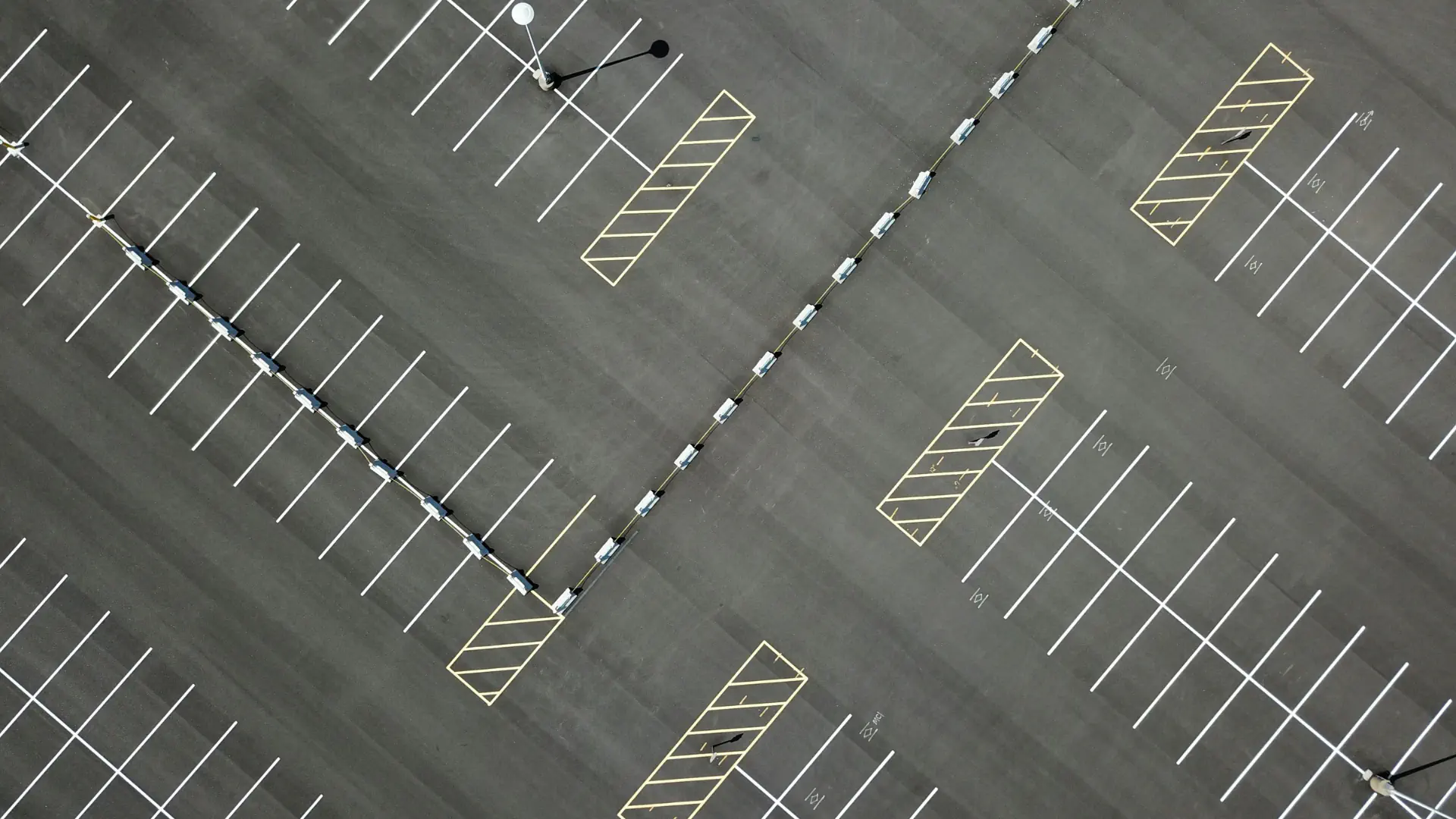
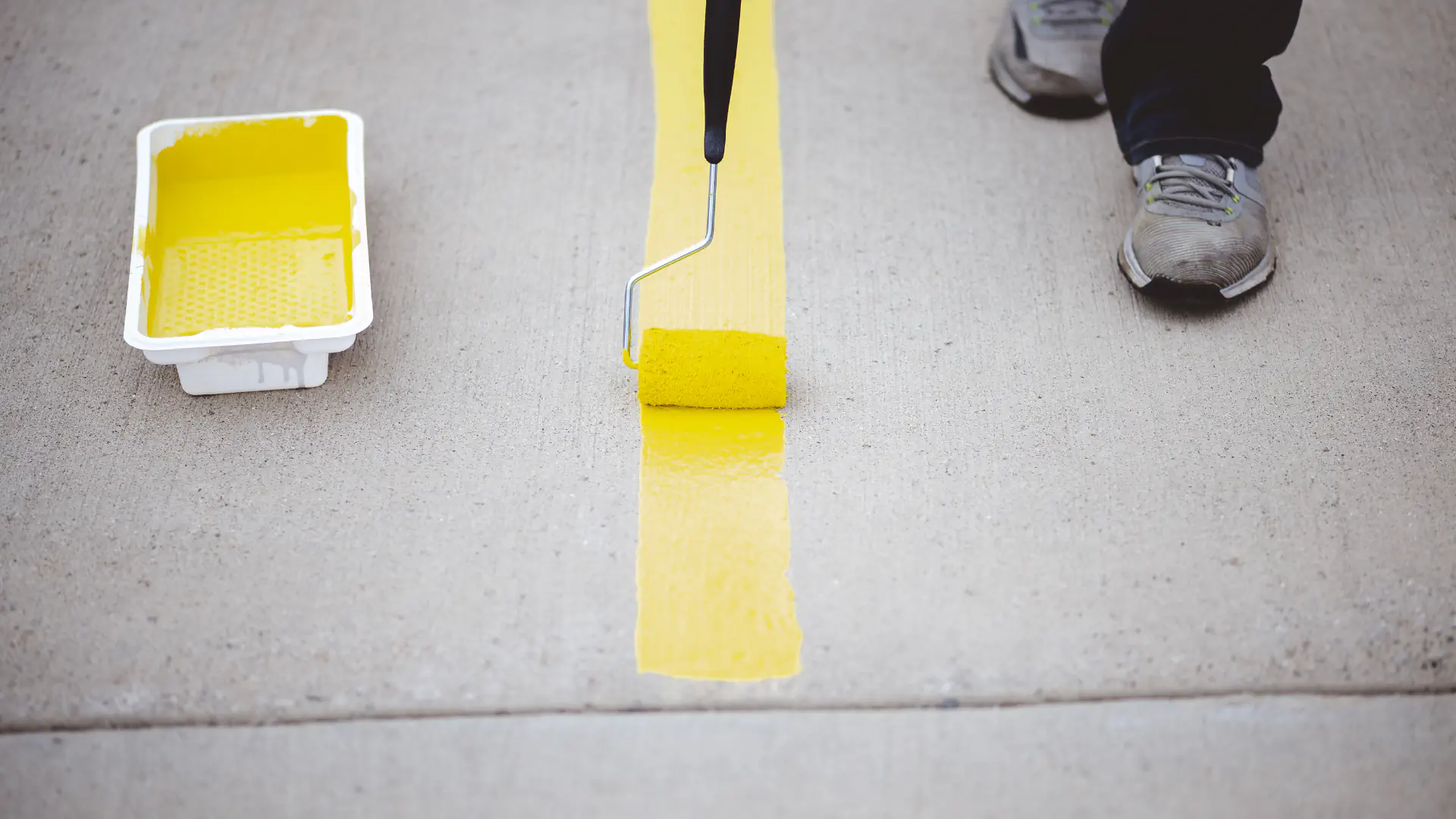
Lot size and layout complexity set the baseline. A small retail lot with straightforward 90-degree stalls costs significantly less than a large commercial facility with angled parking, fire lanes, directional arrows, and loading zone designations. New layouts, where lines are being designed and placed from scratch, cost more than restriping an existing layout because they require full measurement, planning, and marking before a single line is painted.
Paint type and material quality affect both price and longevity. Standard traffic paint is the lower-cost option, but in Denver’s climate, it wears faster under freeze-thaw cycling and heavy traffic. High-durability coatings and thermoplastic markings carry a higher upfront cost but deliver a materially longer service life, particularly on high-volume commercial surfaces where restriping every season becomes its own budget line item.
ADA compliance requirements add scope to almost every commercial striping project. Accessible stall dimensions, van-accessible spaces, proper signage placement, and compliant access aisle widths must be measured and executed precisely. Any Denver commercial asphalt company that approaches ADA compliance as optional rather than mandatory is creating liability exposure for the property owner, not saving them money.
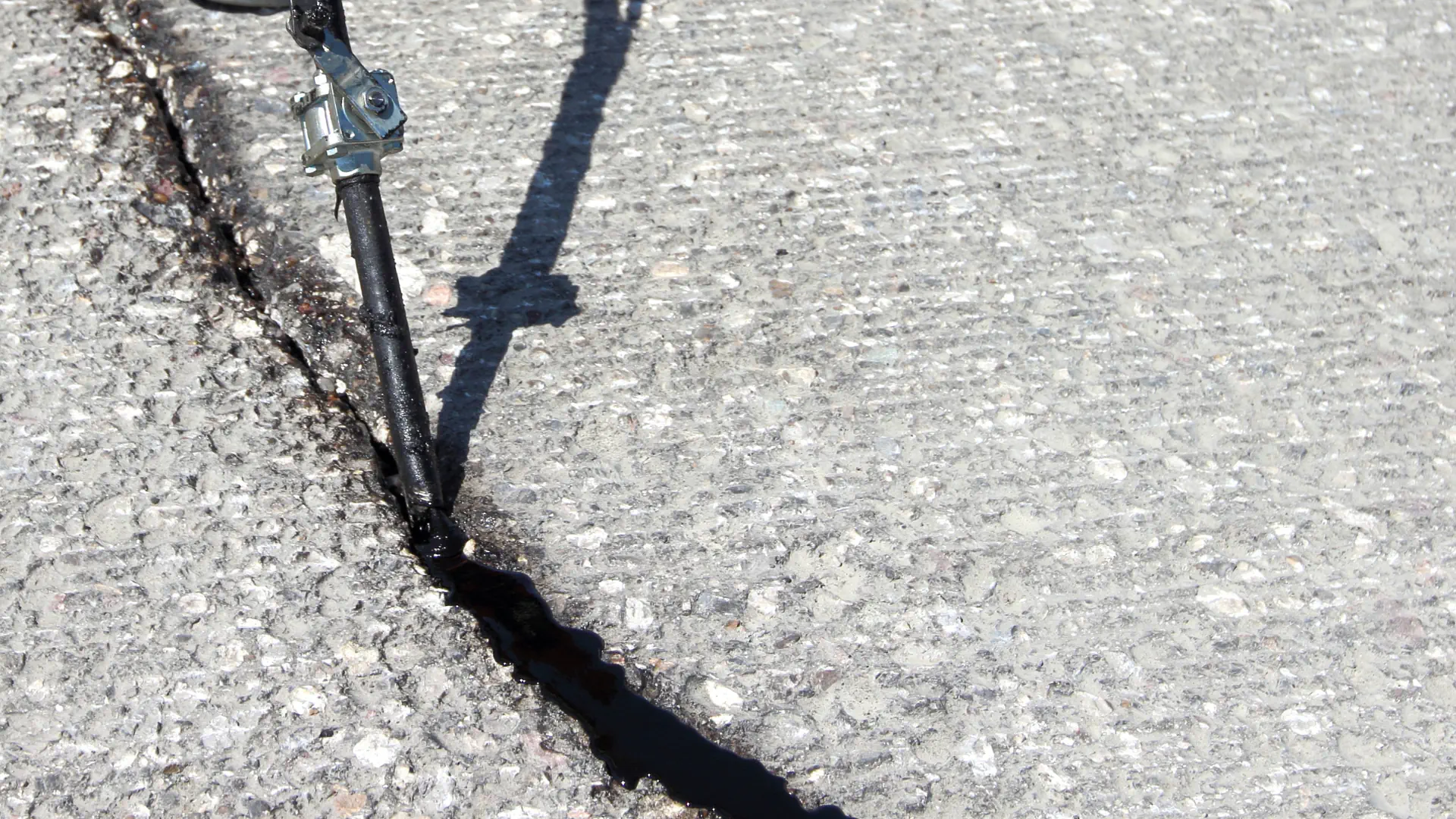
Surface condition is the variable that surprises property owners most often. A lot with significant cracking, fading from prior striping, or drainage-related surface damage requires prep work before new lines can be applied. Skipping that prep compromises paint adhesion and reduces the lifespan of the new striping substantially.
Weather windows in Denver add a scheduling dimension that contractors in milder climates don’t have to manage as carefully. Paint requires dry conditions and moderate temperatures to adhere and cure properly. During shoulder seasons, available scheduling windows can be limited, which affects project timelines and occasionally cost.
How Much Should I Charge for Parking Lot Striping?
For property owners evaluating quotes, understanding how professional asphalt companies in Denver build their striping estimates helps identify whether a bid reflects real project scope or a lowball number that will require rework within a season or two.
Reputable contractors price striping based on the following inputs:
Linear footage of lines, arrows, and symbols: The total length of all painted markings drives material consumption and labor time directly. A lot with extensive directional signage, crosswalks, and fire lane markings carries more linear footage than a basic stall layout of the same square footage.
Stall count and ADA space requirements: Each accessible stall requires specific dimensions, access aisle widths, and in many cases, updated or added signage. These add time and material to the project scope.
Surface preparation needs: Cleaning, crack filling, and old paint removal before new lines go down add labor and material cost. Contractors who skip this step are handing the property owner a shorter service life, not a better deal.
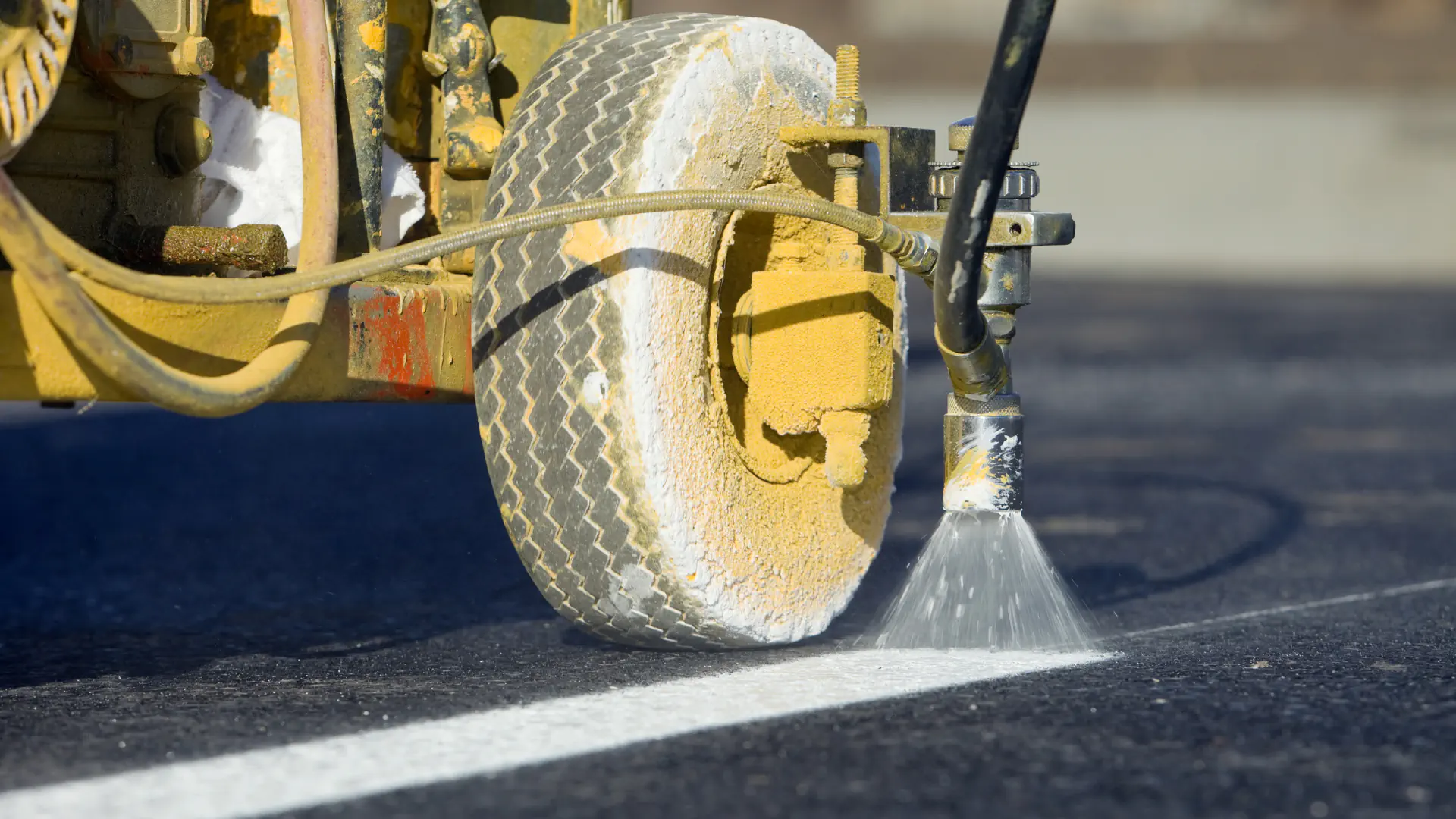
Equipment, mobilization, and traffic control: Striping machines, layout tools, and any required traffic management for active lots add overhead that responsible contractors account for transparently.
Material grade selection: Standard paint, epoxy-based coatings, and thermoplastic markings all sit at different price points. DMH Site Services helps commercial clients choose the right material for their traffic volume, surface condition, and maintenance budget, rather than defaulting to the cheapest option regardless of fit.
Most professional contractors build a per-stall or per-linear-foot base rate and adjust for job-specific complexity. Quotes that don’t account for these variables aren’t complete estimates, they’re starting points that tend to grow once the project is underway.
How to Estimate Parking Lot Striping?
A thorough estimate starts with a site visit, not a square-footage formula. The estimating process that DMH Site Services follows for parking lot striping in Denver reflects the full scope of what the project actually requires:
Site measurement and layout planning come first. Total square footage, stall count, layout type, 90-degree, angled, or parallel, and the location of required ADA spaces, fire lanes, and directional markings are all mapped before any numbers are attached.
Linear footage calculation translates the layout plan into a measurable quantity of striping. This is the core unit from which material and labor costs are derived.
Surface condition assessment determines what prep work is needed before paint is applied. A lot receiving consistent asphalt maintenance in Denver, CO, crack sealing, sealcoating, and surface repairs on schedule, requires less prep work before restriping and tends to hold new markings significantly longer than a neglected surface.
Compliance review confirms that the layout meets current ADA requirements and any applicable local code standards. For commercial properties, this step protects the owner from liability and avoids the cost of correcting non-compliant work after the fact.
Weather and scheduling assessment is the final input. In Denver, paint adhesion and curing depend on dry conditions and temperatures within an appropriate range. DMH Site Services builds scheduling buffers into commercial estimates to account for Denver’s unpredictable weather patterns, especially during spring and fall when striping demand peaks.
Why Is Parking Lot Striping so Expensive?
This is the question property managers ask most often, especially when comparing quotes from different contractors. The answer reflects what a professional striping job actually involves.
Regulatory compliance is non-negotiable. ADA requirements and local codes must be followed exactly. Errors in accessible stall placement or access aisle dimensions create legal exposure for the property owner that far exceeds the cost of getting it right the first time. Professional asphalt companies in Denver carry this compliance responsibility on every striping project.
Layout work is precision labor. Accurate measurements across a full commercial lot, accounting for drainage grades, existing surface features, and entry/exit geometry, take time and skill. Rushed or careless layout work shows up in poorly aligned stalls and wasted space that reduces the lot’s functional capacity.
Material quality affects total cost of ownership. High-durability coatings cost more per application but require restriping far less frequently. On a high-volume commercial lot in Denver, where freeze-thaw cycles and heavy traffic accelerate paint wear, choosing a lower-grade material to save money upfront typically results in higher spending over a three-to-five-year window.
Equipment and mobilization add real overhead. Professional striping machines, layout tools, and any required traffic control for occupied lots represent legitimate project costs. Contractors who price below these real inputs are either cutting corners on materials or on the scope of work itself.
When parking lot striping in Denver is done correctly by a qualified team like DMH Site Services, the result is a safe, compliant, clearly marked lot that holds up under real commercial use, and doesn’t need to be redone every season.
Is Parking Lot Striping a Profitable?
Yes, when executed with the right volume, efficiency, and client relationships, striping delivers strong margins relative to heavier construction services like paving or base reconstruction.
The economics work in the contractor’s favor because material costs are modest compared to labor and overhead. Profitability scales with job volume, repeat commercial clients, and the ability to bundle striping with complementary services. DMH Site Services integrates striping into broader asphalt maintenance in Denver, CO programs that also include sealcoating, crack repair, and where applicable, commercial snow removal in Denver, CO, creating full-season service relationships with commercial properties that benefit from a single, accountable provider.
For property owners, understanding that striping contractors are running a business with real overhead helps calibrate expectations around pricing. The lowest bid rarely reflects the full scope of what a professional job requires, and the gap between a $500 quote and a $1,500 quote usually lives in the prep work, material quality, and compliance review that the lower number omitted.
Accurate Striping Starts With an Accurate Site Assessment
If you manage a commercial property in DENVER and you’re planning a striping project, whether it’s a full new layout, a restripe of existing markings, or an ADA compliance update, the most important first step is a site evaluation from a contractor who knows what they’re actually looking at.
DMH Site Services provides complete parking lot striping in Denver as part of a full-service pavement program that covers asphalt paving, asphalt maintenance in Denver, CO, commercial snow removal, and coordination with concrete contractors in Denver for curb, apron, and flatwork projects. Our team evaluates surface condition, compliance requirements, layout efficiency, and material selection before a number is ever attached to the project, so what you receive is a complete, accurate estimate, not a starting point that grows.
Contact DMH Site Services today to schedule your site assessment and get a clear picture of what your parking lot striping project requires, what it will cost, and how to protect that investment for years after the paint dries.