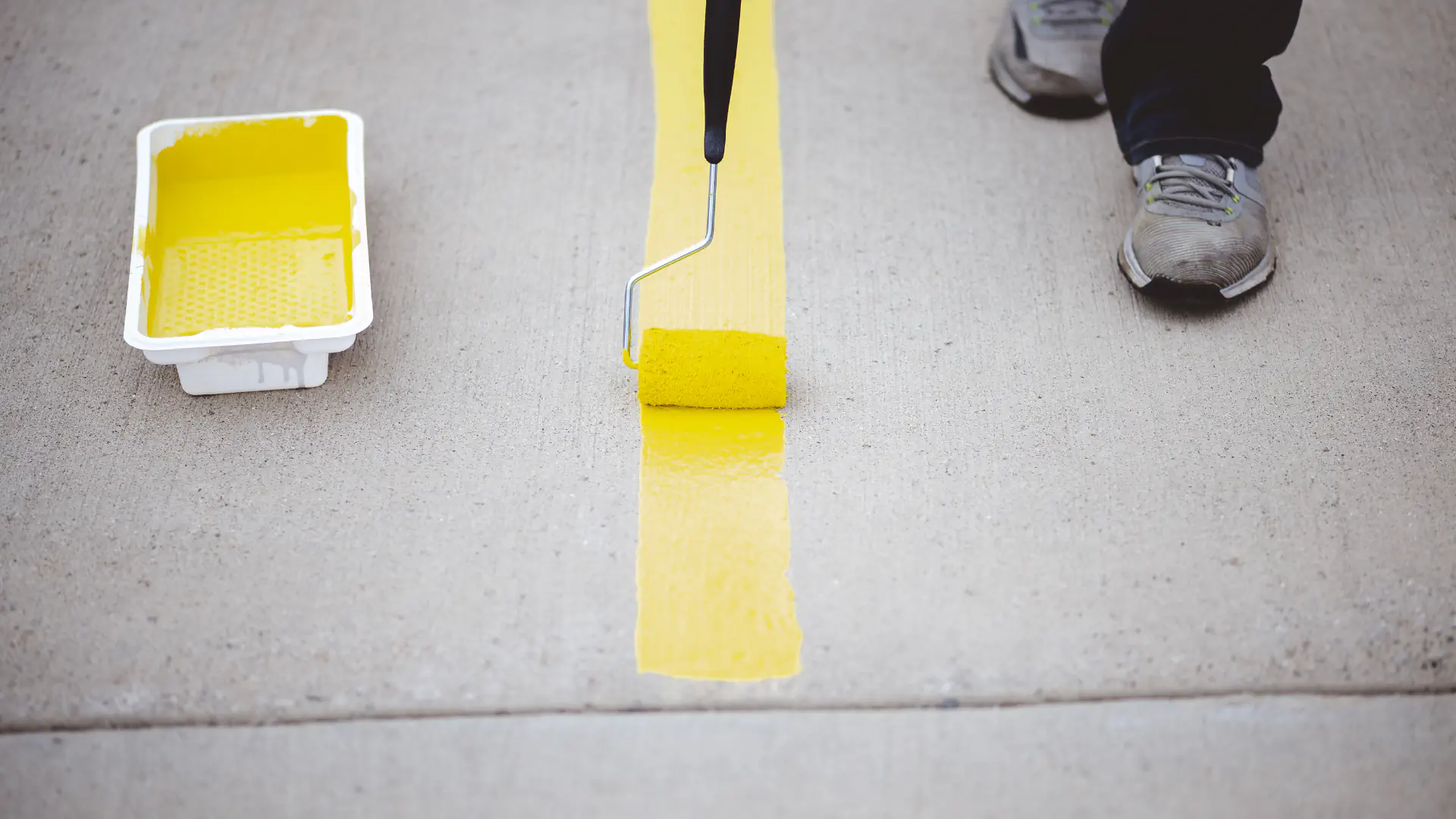

The answer depends on more variables than most property owners expect. Total linear footage, line width, number of coats, surface texture, and paint type all affect how much material a striping project requires. As a general baseline, one gallon of striping paint covers approximately 300 to 400 linear feet of a standard 4-inch line per coat on smooth, well-prepared asphalt.
In practical terms, a small commercial lot might require 5 to 10 gallons for a complete re-stripe. A large commercial parking lot with ADA markings, fire lane designations, directional arrows, and multiple driving lanes can require 20 to 50 gallons or more depending on layout complexity and surface condition. Rough or heavily oxidized asphalt absorbs more paint than a smooth surface, which increases material usage, sometimes significantly. Most experienced contractors, including the team at DMH Site Services, build in a 10 to 20 percent material buffer to account for overspray, touch-ups, and surface variation across a large lot.
Getting the paint quantity right from the start is part of what separates a professional parking lot striping in DENVER project from one that runs short on material mid-job or wastes product through poor planning.
How Do You Quote a Parking Lot Striping Job?
A professional striping quote is built on measured data, not estimates from the parking lot entrance. DMH Site Services approaches parking lot striping in DENVER by walking every property before a number is put on paper. The key factors that drive a striping quote include:
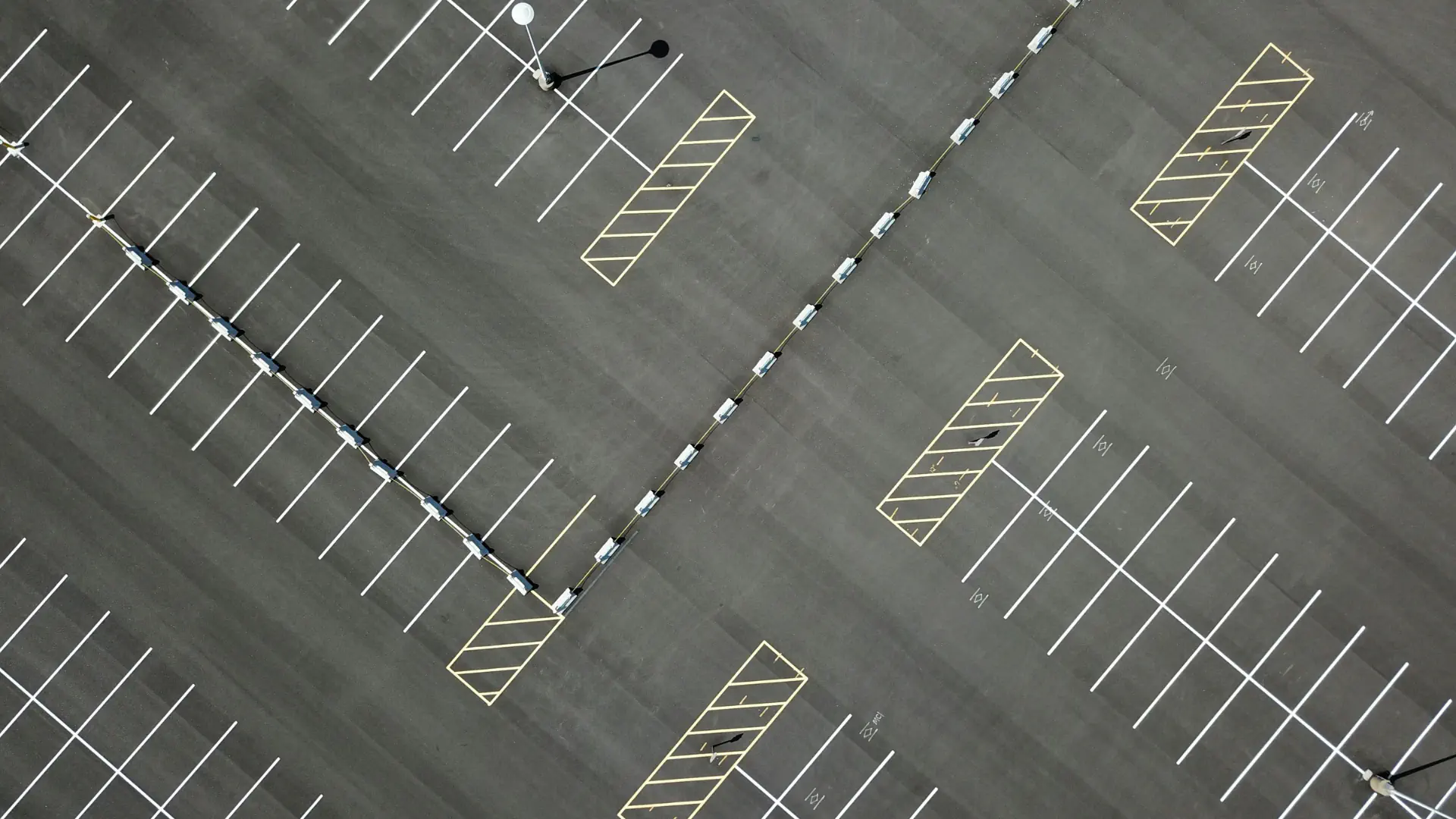
Total linear footage: Every line on the lot gets measured: parking stall boundaries, driving lane borders, pedestrian crosswalks, and any specialty markings. This is the foundation of both the paint quantity calculation and the labor estimate.
Number of parking stalls: Standard stall counts drive the bulk of the work on most commercial lots. Stall width, angle, and spacing all affect how many fit within a given footprint and how long layout takes before painting begins.
ADA compliance markings: Accessible parking spaces, access aisles, and related signage requirements are regulated federally and must meet specific dimension and color standards. These markings take more time and precision than standard stalls and are priced accordingly.
Fire lanes and directional symbols: Fire lane borders, no-parking zones, entrance arrows, and stop bars require masking, careful alignment, and in some cases stencil work. These elements are typically quoted separately from standard line striping.
Surface condition: New asphalt paving in DENVER provides an ideal striping surface. Heavily faded or deteriorated asphalt may require surface cleaning or light preparation before paint adheres correctly. DMH Site Services evaluates surface condition as part of every striping assessment, and coordinates with asphalt companies in DENVER when resurfacing or patching is needed before striping begins.
Layout complexity: Angled stalls, curved lot edges, multiple driving directions, and tight maneuvering zones all add layout time. Simple rectangular lots with straight stalls are faster to plan and execute than complex layouts with varied stall angles or multiple driving surfaces.
Most commercial striping projects are priced per stall or as a full project bid rather than strictly by paint usage, since labor and layout time are often the larger cost drivers on mid-to-large lots.
What Are Common Striping Mistakes?
Striping mistakes are more common than they should be, and most of them are preventable with proper planning and site preparation. The DMH Site Services team regularly assesses lots where previous striping work created compliance gaps or layout problems that required complete rework. The most frequent issues include:
Incorrect measurements and misaligned stalls: Stall spacing errors compound across a lot. A small measurement mistake at the start of a row can result in the final stalls being too narrow or misaligned with the driving lane. Layout chalking and dry-run marking before painting are non-negotiable steps that inexperienced crews sometimes skip.
Ignoring ADA requirements: Accessible parking compliance is not optional. Incorrect stall dimensions, missing access aisles, or improper slope create legal liability for the property owner regardless of how the markings look. ADA striping must meet federal standards, and a Denver commercial asphalt company like DMH Site Services builds compliance verification into every project that includes accessible spaces.
Painting over dirty or dusty surfaces: Paint applied to a contaminated surface does not bond correctly. It may look acceptable immediately after application but begins peeling or fading far sooner than properly prepared pavement. Surface cleaning before striping is a baseline requirement, not an optional add-on.
Using the wrong paint type for local climate: Water-based traffic paint performs differently than oil-based or solvent-based formulations, and DENVER’s temperature swings and UV intensity affect long-term durability. Choosing the correct paint type for the season and surface condition is part of what makes parking lot striping in DENVER last through a full year of weather exposure.
Underestimating dry time before reopening traffic: Reopening a freshly striped lot too early damages the lines before they fully cure. On busy commercial properties, this requires coordination between the striping crew and property management to hold traffic access long enough for the paint to set properly.
Each of these mistakes leads to faster fading, safety exposure, and costly rework, all of which are more expensive than doing the job correctly the first time.
How to Calculate Parking Lot Striping?
For contractors building a quote or property managers trying to understand what a striping project involves, the calculation process follows a consistent structure:
- Measure total linear feet of every line type: stall boundaries, lane borders, crosswalks, fire lane markings, and any specialty symbols or arrows.
- Divide by paint coverage: approximately 300 to 400 linear feet per gallon per coat on smooth asphalt, adjusting downward for rough or porous surfaces.
- Multiply by coat count: most commercial re-striping uses one to two coats depending on how faded the existing markings are and whether the lot was recently seal-coated as part of an asphalt maintenance in DENVER, CO program.
- Add a 10 to 20 percent buffer for overspray, touch-ups, stencil markings, and surface variation.
This process produces both a paint quantity and a rough labor framework. For large or complex commercial lots, DMH Site Services uses scaled drawings to verify layout accuracy before any paint is loaded into the sprayer. Errors caught on paper cost nothing to fix. Errors caught after painting require stripping or overpainting, neither of which is quick or inexpensive.
What’s the Going Rate for Striping a Parking Lot?
Pricing for parking lot striping in DENVER varies by project scope, surface condition, and the specific markings required. Standard industry ranges include:
$4 to $20 per stall for standard re-striping on an existing layout with clearly defined dimensions. Simple, open lots with straight stalls fall toward the lower end; complex layouts or those requiring full re-layout from scratch cost more.
$0.20 to $0.60 per linear foot for line marking on driving lanes, borders, and directional elements. This range reflects surface condition, paint type, and whether single or double coats are applied.
Full project bids for larger commercial lots, where total scope, including ADA markings, fire lanes, symbols, and layout, is evaluated together and priced as a complete package rather than by individual line item.
ADA markings, fire lane striping, and specialty stencil work are typically quoted separately because of the additional precision, compliance verification, and time they require. Property owners who treat these as afterthoughts often find themselves scheduling a second visit, and paying mobilization costs twice.
DMH Site Services provides full-scope parking lot striping in DENVER as part of a broader commercial pavement program that includes asphalt maintenance in DENVER, CO, commercial snow removal in DENVER, CO, asphalt paving in DENVER, and concrete work through concrete contractors in DENVER. Bundling pavement services reduces per-visit costs and ensures that striping is always applied to a surface in the right condition to hold it.
Striping in the Context of Full Pavement Care
Parking lot striping does not exist in isolation. A freshly striped lot on deteriorating asphalt will show fading and adhesion problems sooner than one applied to a properly maintained surface. Asphalt companies in DENVER that handle both pavement maintenance and striping understand this relationship and can sequence the work correctly, sealcoating or patching first, then striping after the surface has cured.
DMH Site Services builds this coordination into its commercial service model. Properties receiving asphalt maintenance in DENVER, CO get striping evaluated as part of the same visit, so surface treatment and line work are completed in the right order without requiring separate contractor coordination. For properties also managing winter operations, commercial snow removal in DENVER, CO is integrated into the same service plan, ensuring that plow operations are executed in ways that protect the striping investment through the winter months rather than wearing it down prematurely.
Start With a Site Assessment, Not a Paint Order
If you are planning a striping project, whether a full re-stripe, a compliance correction, or a new layout on fresh asphalt paving in DENVER, the most effective starting point is a site layout review, not a paint quantity estimate. Understanding your lot’s exact dimensions, ADA requirements, and surface condition first ensures that the material order is accurate, the layout is compliant, and the finished result lasts as long as it should.
DMH Site Services provides on-site striping assessments for commercial properties throughout the DENVER metro. Contact the team today to schedule your evaluation and get a clear, accurate quote before your project begins.