Concrete pricing sounds straightforward until the quotes start coming in. Two contractors can look at the same slab and return very different numbers, leaving property owners wondering what is actually driving the difference. The answer is rarely just square footage. Site preparation, slab thickness, reinforcement requirements, equipment access, and local material costs all shape the final price, sometimes significantly. Once you understand what goes into a concrete estimate, the numbers become far easier to evaluate and compare.
For property owners in the Denver metro, working with experienced concrete contractors in DENVER means getting pricing that reflects local conditions, soil composition, climate demands, and the specific load requirements of your project, rather than national averages that may not apply to your site. DMH Site Services provides transparent, detailed estimates so clients know exactly what they are paying for before a single form goes in the ground.
What Do Concrete Contractors Typically Charge Per Square Foot?
Contractors generally charge between $6 and $15 per square foot to pour concrete, depending on the complexity of the job, slab thickness, site conditions, and regional labor costs. A straightforward residential slab on a level, easily accessible site typically falls toward the lower end of that range. Reinforced slabs built to handle heavy vehicle loads, projects requiring significant grading or demolition, or pours with specialized finishes such as stamped or exposed aggregate will push toward the higher end.
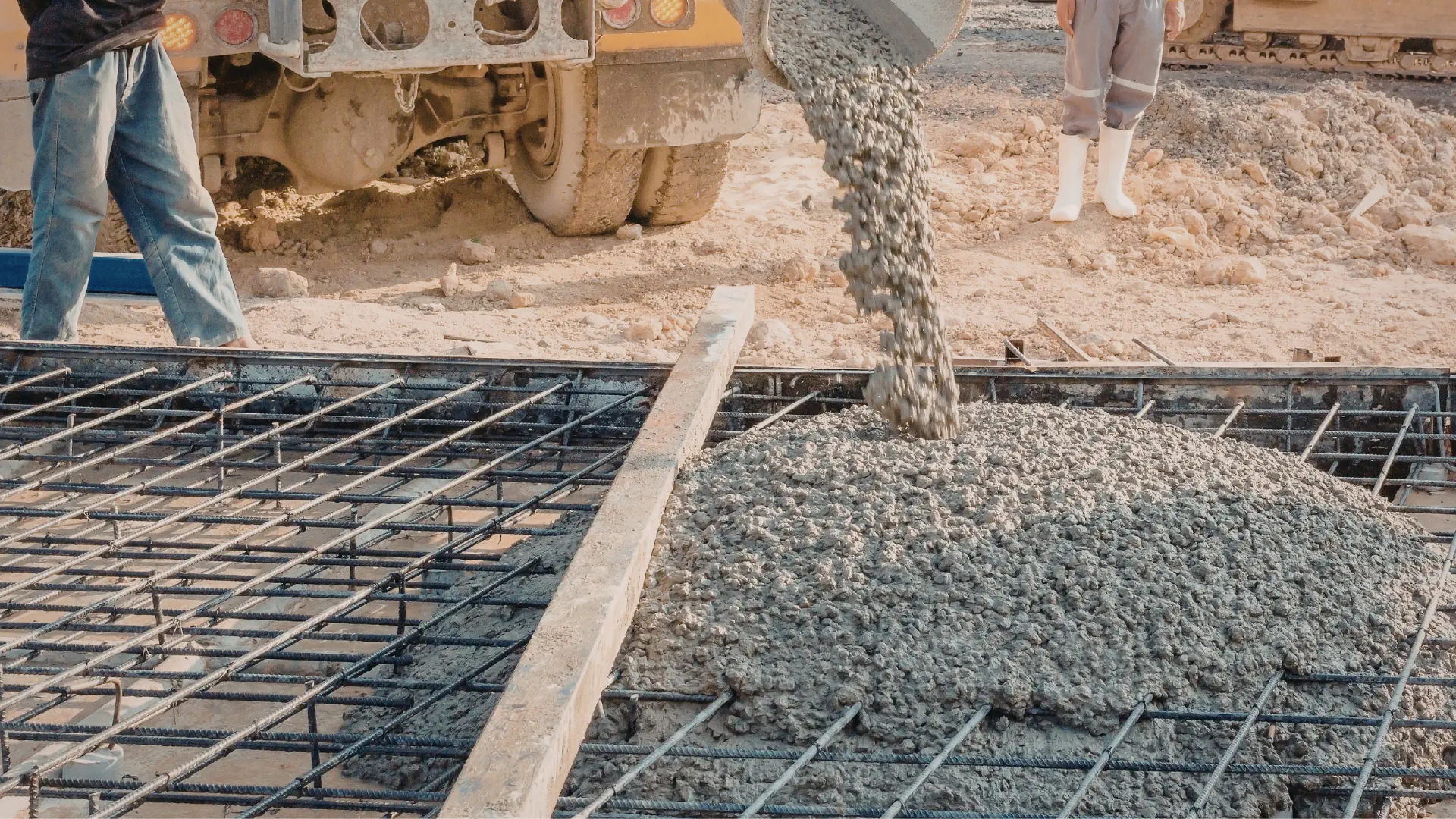
Standard pricing usually includes site preparation, forming, the pour itself, finishing, and basic reinforcement such as rebar or wire mesh. What it may not include, and what can shift a quote considerably, are drainage corrections, difficult equipment access, subgrade issues that require additional compaction material, or design-specific finishes. Larger slabs can reduce the per-square-foot cost slightly through economies of scale, but total project investment increases substantially with size.
DMH Site Services works with concrete contractors in DENVER who bring the same standard of quality to flatwork that the team applies to asphalt paving in DENVER and commercial pavement maintenance. Whether you are pouring a residential patio or a commercial equipment pad, the approach is the same: accurate site assessment first, transparent pricing second, and quality execution throughout.
How Much to Pour a 30×30 Concrete Slab?
A 30×30 slab covers 900 square feet. At the standard range of $6 to $15 per square foot, most property owners can expect a total project cost of roughly $5,400 to $13,500. Several variables will determine where your project lands within that range.
Slab thickness is one of the biggest factors. A standard 4-inch residential slab costs less than a 6-inch slab designed to support vehicle traffic or heavy equipment. Reinforcement type matters as well, wire mesh is adequate for basic patios, while rebar grids are typically required for driveways, garage floors, or any slab bearing significant load. Site preparation needs, including grading, compaction, and base material, add to the total if the ground is uneven or unstable.
Concrete contractors in DENVER also factor in access. A slab in a tight backyard with limited truck clearance requires more labor and setup time than an open front-of-property pour. DMH Site Services evaluates all of these conditions during the estimate process so clients receive a number that reflects their actual project, not a generic average.
How Much Is a 20×20 Slab of Concrete?
A 20×20 slab is 400 square feet, making it one of the most common sizes for residential patios, small garage extensions, and shed foundations. Most homeowners in the DENVER area pay between $2,400 and $6,000 for this size, depending on finish, thickness, and site conditions.
A simple 4-inch patio slab on level, well-drained ground sits comfortably at the lower end. A garage or load-bearing slab, one that needs to handle vehicle weight, requires a thicker pour, or demands a smooth machine finish, will cost more. If the area needs grading before forming can begin, that preparation work adds to the total as well.
For property owners considering complementary work alongside their concrete project, DMH Site Services coordinates concrete contractors in DENVER with the broader range of pavement services the team provides, including asphalt maintenance in DENVER, CO and asphalt paving in DENVER. Sequencing concrete and asphalt work together on the same project visit often reduces overall site costs and minimizes disruption.
How Much Would a 2000 Square Foot Concrete Slab Cost?
A 2,000 square foot slab typically falls in the range of $12,000 to $30,000, depending on project specifications and site conditions. This size represents the transition from residential to light commercial scale, and the pricing reflects that shift. At this scope, base preparation becomes more involved, reinforcement requirements are typically more demanding, and the pour itself requires coordinated crew and equipment resources to complete correctly.
Projects at this scale often include thickened slab edges for structural support, vapor barrier installation beneath the pour, and control joint planning to manage cracking over time. These are not optional additions, they are standard components of a slab designed to perform well over many years under real use conditions.
DMH Site Services approaches large-scale concrete work with the same project management discipline it brings to commercial asphalt paving in DENVER and parking lot striping in DENVER. Larger projects require tighter coordination, and clients at this scale benefit from working with a team experienced in managing multi-phase commercial site work from start to finish.
How Much Does it Cost for a 40×60 Concrete Slab?
A 40×60 slab is 2,400 square feet, a size commonly used for large garages, agricultural buildings, commercial workshops, and equipment storage pads. At standard contractor rates, this project typically costs between $14,400 and $36,000, with the final number driven by reinforcement design, base preparation depth, pour thickness, and finish type.
At this scale, the structural requirements are considerably more involved. Slabs intended for vehicle parking, heavy machinery, or commercial use typically require 6-inch or thicker pours, rebar reinforcement on a defined grid, and engineered base preparation to prevent settling or cracking under load. Control joint placement is also critical at this scale, improper joint spacing on a large slab can result in random cracking that compromises both aesthetics and structural integrity.
Concrete contractors in DENVER who regularly work on commercial-scale pours understand these requirements from the ground up. DMH Site Services brings that commercial expertise to every project and can coordinate large concrete pours alongside asphalt companies in DENVER for properties that need both pavement types as part of a larger site improvement plan.
What Else Affects the Cost of a Concrete Pour in Denver?
Beyond size and thickness, several additional factors influence what concrete contractors in DENVER will charge for a given project:
Demolition and removal: If an existing slab, asphalt surface, or gravel base needs to be removed before forming can begin, that work adds to the project cost. DMH Site Services handles demolition and removal as part of site preparation, coordinating this work alongside asphalt companies in DENVER when mixed pavement removal is involved.
Drainage and subgrade conditions: Poor drainage or unstable soil requires correction before a slab is poured. Skipping this step creates settlement and cracking issues that surface within a few years, particularly in DENVER where freeze-thaw cycles stress concrete foundations from below.
Finish type: Broom finish is standard and the most affordable. Stamped, exposed aggregate, or polished finishes require additional labor and materials, increasing per-square-foot costs meaningfully.
Seasonal timing: Like asphalt paving in DENVER, concrete is temperature-sensitive. DENVER winters create scheduling constraints, and cold-weather concrete work requires protective measures that add cost. Commercial snow removal in DENVER, CO also affects how long new concrete needs to be protected after a winter pour before full traffic loading begins.
Get an Accurate Estimate Before You Commit
The best way to understand your true concrete cost is an on-site evaluation from a qualified contractor. Site conditions, usage requirements, and access all affect pricing in ways that no online calculator can fully account for. DMH Site Services provides detailed assessments for concrete projects of every scale, from residential patios to large commercial pads, with clear, itemized estimates that make comparison straightforward.
Contact DMH Site Services today to schedule your site evaluation and get pricing from concrete contractors in DENVER who understand what your project actually requires.