If you manage a commercial property in Denver, snow removal isn’t just a seasonal inconvenience, it’s a liability issue, an operations issue, and a safety issue all at once. Get it wrong and you’re looking at slip-and-fall claims, blocked access, and frustrated tenants. Get it right and your property stays functional and protected no matter what Colorado’s winter throws at it. At DMH Site Services, commercial snow removal in Denver, CO is a core part of how we help property managers stay ahead of the season, not scrambling through it.
What Most Property Managers Need to Know?
Commercial snow removal pricing in Denver typically falls within these ranges:
- $100 to $200 per hour per crew for plowing services
- $25 to $75 per push or pass for individual service events
- $150 to $500+ per visit for small commercial lots
- $500 to several thousand dollars per storm for large properties
Most commercial contracts are structured around one of three pricing models:
Per push, billed each time snow is cleared, regardless of storm duration Per event, covers the full storm from start to finish as a single service event Seasonal contract, a fixed price for complete winter coverage across all qualifying weather events
In high-demand markets like Denver, pricing also accounts for freeze-thaw ice management and de-icing applications, not just the plowing itself. Property managers who plan only for plowing costs often get surprised when ice mitigation adds up across a long winter season.
A Local Perspective: Why Snow Removal Costs Vary So Much in Denver
Commercial snow removal in Denver, CO isn’t simply a matter of pushing snow off a lot. It’s about managing risk across a season that rarely behaves predictably. Denver crews regularly contend with:
- Rapid freeze-thaw conditions that convert daytime meltwater into overnight ice sheets
- Heavy, wet snow that requires multiple passes and more powerful equipment
- De-icing and anti-icing applications necessary for liability protection on high-traffic surfaces
This is why two properties with identical lot sizes can carry very different service costs. One may require only plowing after a clean snowfall. Another may need salt applications, return visits after refreezing, and ice mitigation across multiple days. The scope of service, not just the square footage, is what drives the price.
DMH Site Services scopes every property before the season begins. That assessment shapes the contract structure and ensures no property manager is caught off guard when a complex storm hits.
How Much Should I Charge for Commercial Snow Removal?
For contractors pricing their own services, a professional rate structure typically looks like this:
- $125 to $250 per hour per truck or crew
- $30 to $100 per push, scaled to lot size and complexity
- Seasonal contracts ranging from $2,000 to $50,000+ per property, depending on scope
Higher pricing is warranted when:
- Multiple return visits are required during or after a single storm
- De-icing materials are included in the service scope
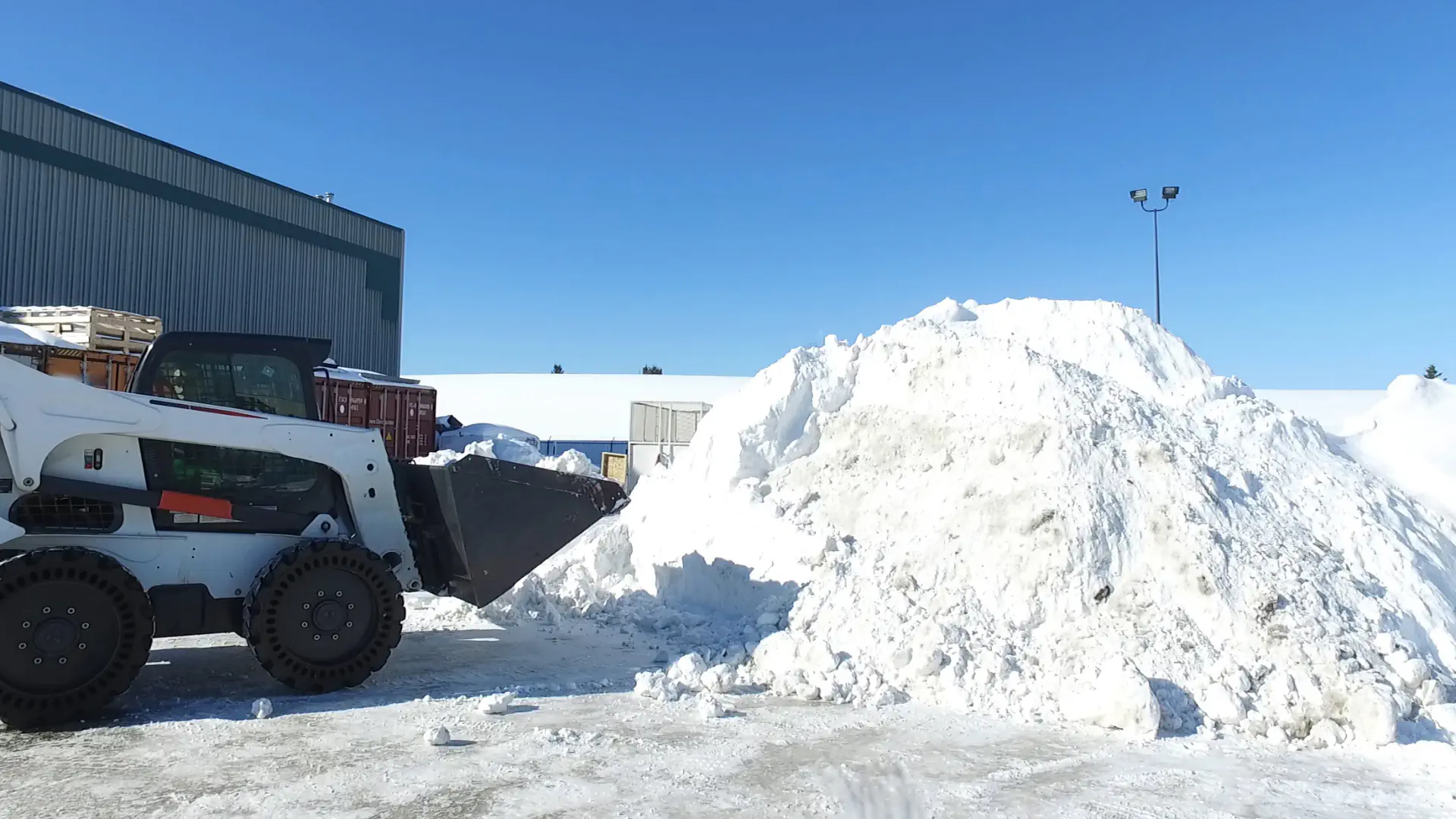
- Large equipment, loaders, skid steers, or multi-truck crews, is required for the property
The most important principle: price based on time, trigger depth, and liability exposure, not square footage alone. A 2-inch trigger on a high-foot-traffic medical office is a very different job than a 4-inch trigger on an industrial lot that closes at 5 p.m.
How Do I Quote a Commercial Plowing Job?
A professional snow removal quote covers more than a lot walk and a price per push. Here’s how experienced contractors approach it:
- Measure total plowable area: not just overall property size, but the actual surface that needs clearing
- Identify snow storage areas: where snow will be pushed and stacked without blocking access or drainage
- Define the trigger depth: the snow accumulation level that initiates service (commonly 2 or 4 inches)
- Assess site complexity: curbs, parking islands, tight turning radii, and pedestrian pathways all add time
- Include ice management scope: whether de-icing is part of every visit or an add-on service
Then select the pricing model that fits the client’s needs:
- Per push: Best for properties with predictable, single-event storms
- Per event: Better for multi-day or unpredictable storm patterns
- Seasonal contract: Best for consistent revenue and long-term client relationships
Most professional contractors, including the team at DMH Site Services, also build in a storm standby fee for overnight availability. Emergency response has a cost, and contracts that account for it upfront keep both sides protected.
How Much Should I Charge to Remove Snow Cost from a 600 sq ft Driveway?
For smaller residential-scale jobs, typical pricing runs:
- $30 to $100 per visit for basic plowing
- $75 to $150 per visit when shoveling or de-icing is included
Price variation comes from snow depth, ice conditions, whether salt or ice melt is applied, and site accessibility. Tight or narrow driveways that limit equipment maneuverability cost more time, and time is what service pricing is really based on.
Small jobs also commonly carry a minimum service fee because mobilization costs, fuel, travel time, and labor, remain fixed regardless of the job’s size. This is standard practice across asphalt companies in Denver and snow removal contractors alike.
What Is a Good Profit Margin for a Snow Removal Company?
A well-run snow removal operation typically targets:
- 20% to 40% profit margin under average operating conditions
- 40% to 60% on optimized, well-structured seasonal contracts
- Lower margins are common in heavy winters where overtime labor and material costs spike
The biggest levers on profitability are equipment ownership versus rental, fuel and salt cost management, route efficiency, and contract structure. Seasonal contracts provide the most predictable margins, per-storm pricing carries more variability but can outperform in heavy winters.
For Denver commercial asphalt companies that bundle snow removal with asphalt maintenance and paving services, the efficiency of a single-vendor relationship benefits both sides. DMH Site Services structures contracts with this in mind, consistent service, predictable pricing, and no gaps in coverage when conditions shift.
If You’re in Denver, Here’s How to Approach It
Commercial property managers in Denver who secure a seasonal contract before the first storm hits are consistently better positioned than those who react storm by storm. A well-structured seasonal agreement with defined triggers, clear scope, and built-in ice management removes the guesswork, and the surprise invoices, from winter operations entirely.
DMH Site Services works with commercial property owners and managers across Denver to build contracts that match the property’s actual risk profile and service needs. From commercial snow removal in Denver, CO and asphalt maintenance to parking lot striping in Denver and coordination with concrete contractors in Denver, we keep properties protected across every season.
Reach out to DMH Site Services before the season starts. A properly structured winter plan doesn’t just control costs, it protects your business when the weather moves fast.